
INSIGHT
Timeless or tired?
Reigniting the power of your heritage brand
As the retail landscape evolves rapidly under the pressure of e-commerce, shifting consumer values and the rise of experience-driven shopping, heritage brands face a particular challenge: how to stay relevant without losing their identity? While their legacy offers brand equity and customer loyalty, it can also act as a constraint in a market that values agility, modern aesthetics and local authenticity.
The recently released report based on a global survey across 16 markets, The Future 100: 2026 highlights the importance of heritage and history, where more and more brands are banking on their past to create distinctive market advantages. “Nostalgia for simpler times enhances the appeal of brands with a long heritage,” says Kathleen Adams, Professorial Research Associate at SOAS. Recent examples are Balenciaga, where under new creative director Pierpaolo Piccioli, intentionally revisited its heritage by reviving the 1947 Le Dix fragrance, using it as a way to celebrate and reinterpret its history. Likewise, Bottega Veneta’s incoming creative director, Louise Trotter, drew on the brand’s past to connect with modern audiences, spotlighting its renowned craftsmanship through the signature 1975 Intrecciato weave in her debut Spring/Summer 2026 collection.
Yet we have often noticed a core predicament for heritage brands: there’s a limit to how often you can rely on longevity alone to capture attention. Over time, what once felt timeless can begin to feel outdated if not thoughtfully refreshed. A good example would be Jaguar’s rebrand which stepped into a new market space without the emotive or cultural equities that made the brand powerful. The result? A sleek yet forgettable identity that failed to connect with either legacy customers or new audiences.
Before we unpack how best to approach heritage brand designs, it’s essential to understand what sets them apart and why that matters.
Enduring trust: A long-standing presence signals quality, consistency, and emotional connection, values that should be reflected spatially.
A rich brand narrative: From founding stories to generational craftsmanship, successful heritage brand strategy uses layered storytelling opportunities that can be brought to life through materiality, layout and detail.
Cultural and community roots: Many heritage retailers hold strong local or cultural significance. Thoughtful retail brand evolution can reinforce those ties, creating spaces that feel both familiar and elevated.
Only once these key principles are established and recognised can we determine how best to leverage them to elevate your store design.
Why heritage retailers must redesign more than just their stores to stay relevant
For heritage brands, staying current is not just about updating furniture or introducing digital screens, it's about recalibrating the entire brand experience. Customers today expect a sense of authenticity, community and responsiveness that legacy brands often can struggle to deliver.
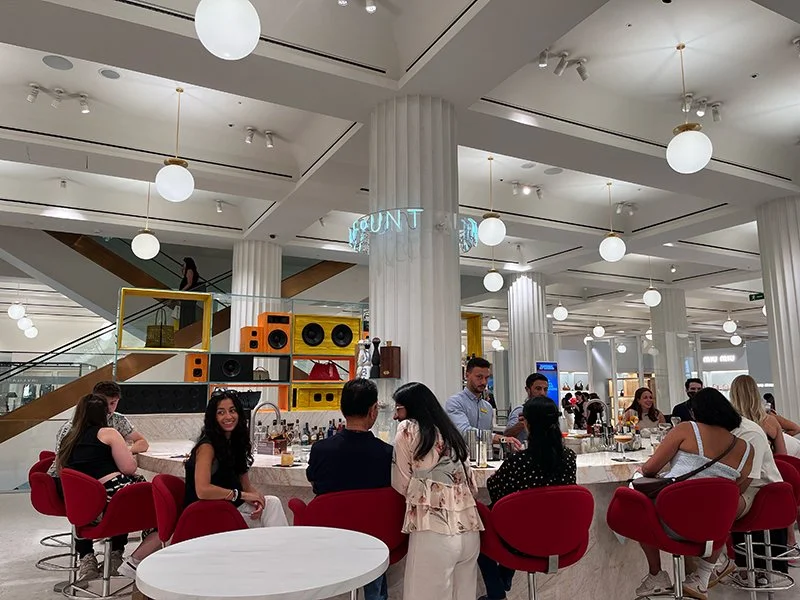
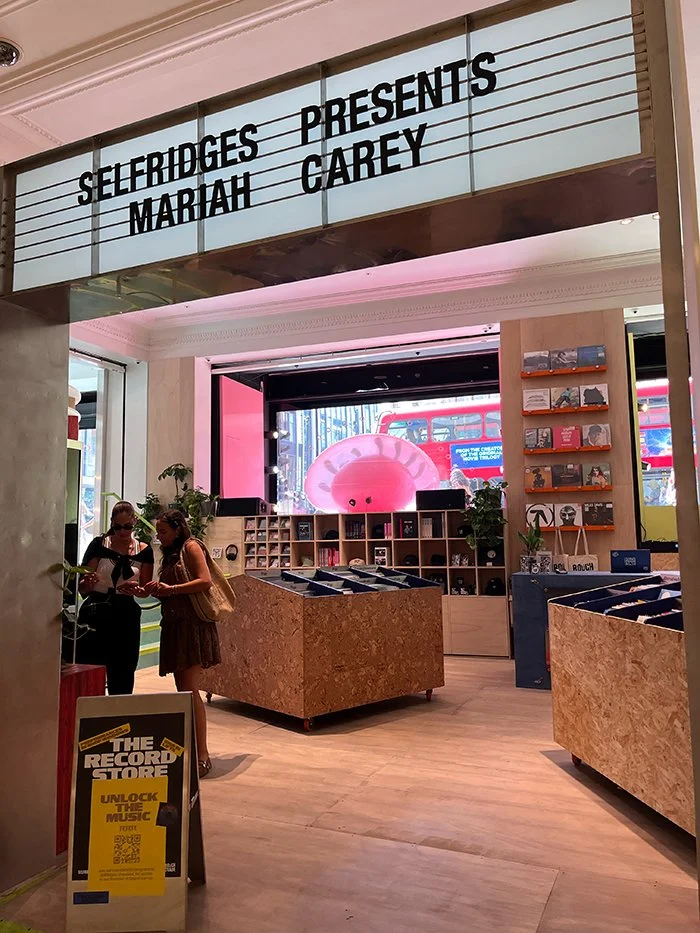
In the UK, Selfridges has made significant strides to continually refresh its in-store experience. Their brand vision to reinvent retail, making it fun, creative and a landmark destination rather than just a store leads to innovative collaborations and an ever-changing, authentic social hub.
While maintaining its reputation for quality and innovation, it has introduced pop-up concepts, community spaces, and even wellness zones to re-engage customers seeking more than just a transaction. Often these are placed right in the middle of a retail space creating a buzz and stimulating fusion between hospitality and retail. The redesigns go hand in hand with efforts in brand messaging and service innovation, reflecting the need for a holistic, experience-first approach.
Pop-up spaces in Selfridges
How legacy brands use design to be local, authentic and anything but a chain
One of the most notable shifts in heritage retail design is the pivot away from uniformity. Instead of rolling out identical stores, modernising retail brands are increasingly adopting hyper-localised concepts that reflect the culture, architecture and preferences of specific locations.
Take Aesop as a successful global model, each store is custom-designed in collaboration with local architects, often incorporating native materials and references to local history.
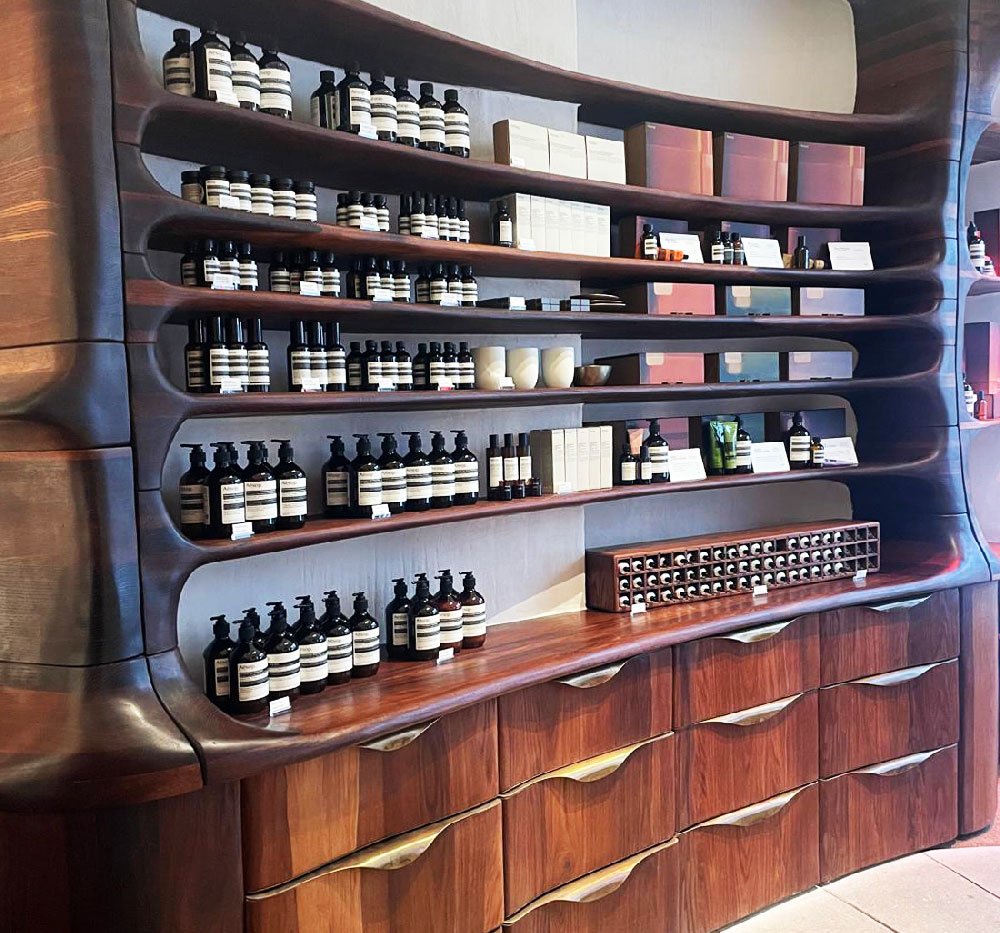
Aesop, tiled and earthy London store
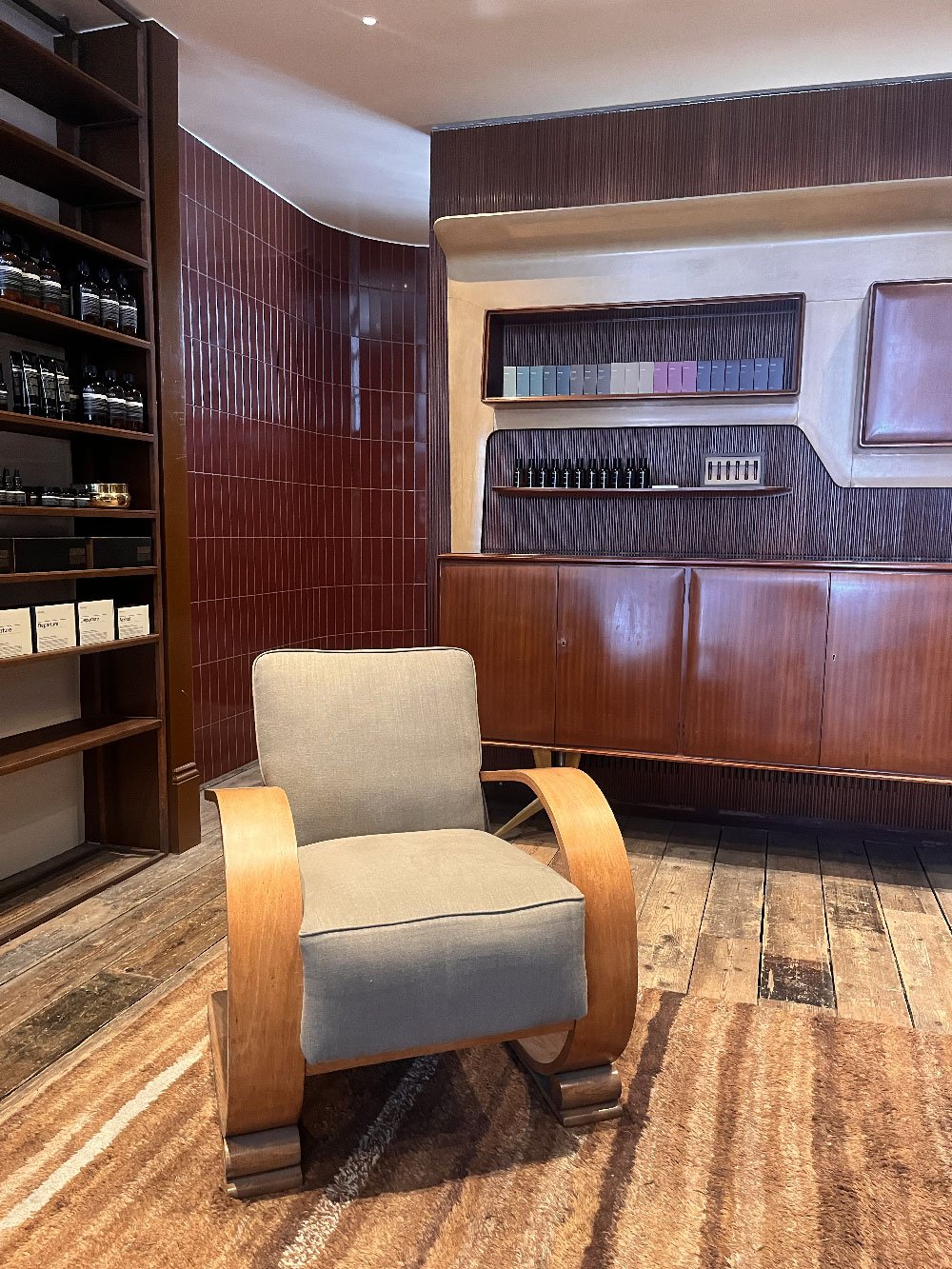
Aesop, Paris store with elegant Art Nouveau inspired curved fixture details
Another good example of a legacy brand revitalisation done well is Marks & Spencer, which has begun rolling out new-format food halls and urban stores tailored to the lifestyles and habits of nearby shoppers, offering layouts and aesthetics that diverge from their standard model.
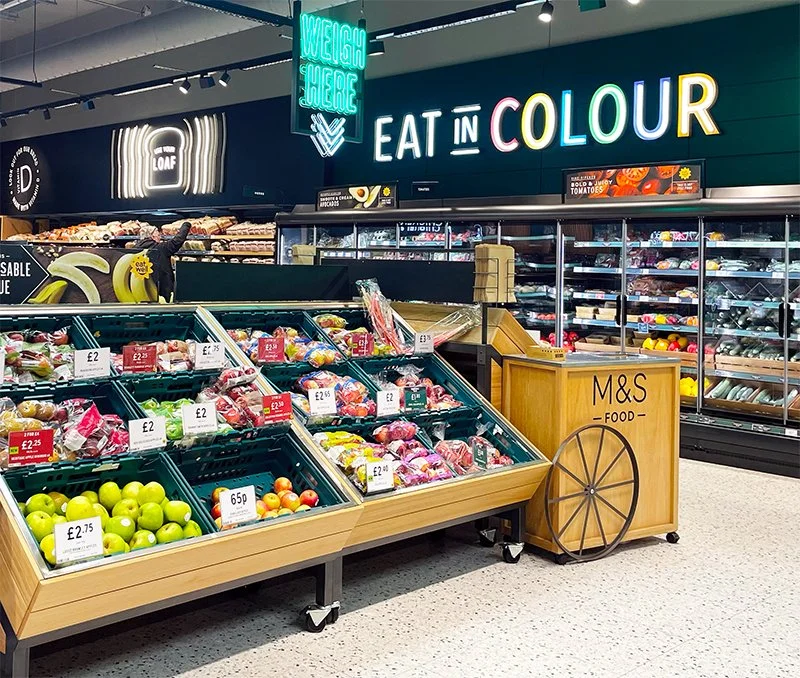
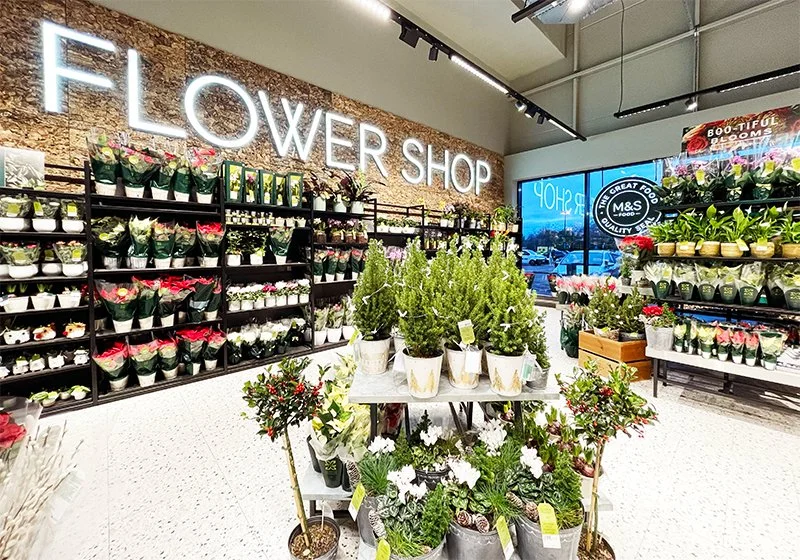
Marks & Spencers new retail park store format, London
Fortnum & Mason: international heritage with local appeal
Fortnum & Mason’s global expansion offers a compelling study in how a heritage British brand can thoughtfully adapt to diverse cultural landscapes without compromising its identity. From the bustling heart of Hong Kong to the luxury terminals of Dubai, each international location is a unique expression of Fortnum’s signature charm - Georgian elegance, the iconic eau de nil palette, and traditional British rituals. Through nuanced design strategies that respond to local context, climate and consumer behaviour, Fortnum & Mason succeeds in creating spaces that feel simultaneously authentic and locally resonant, blending history and hospitality into each destination.
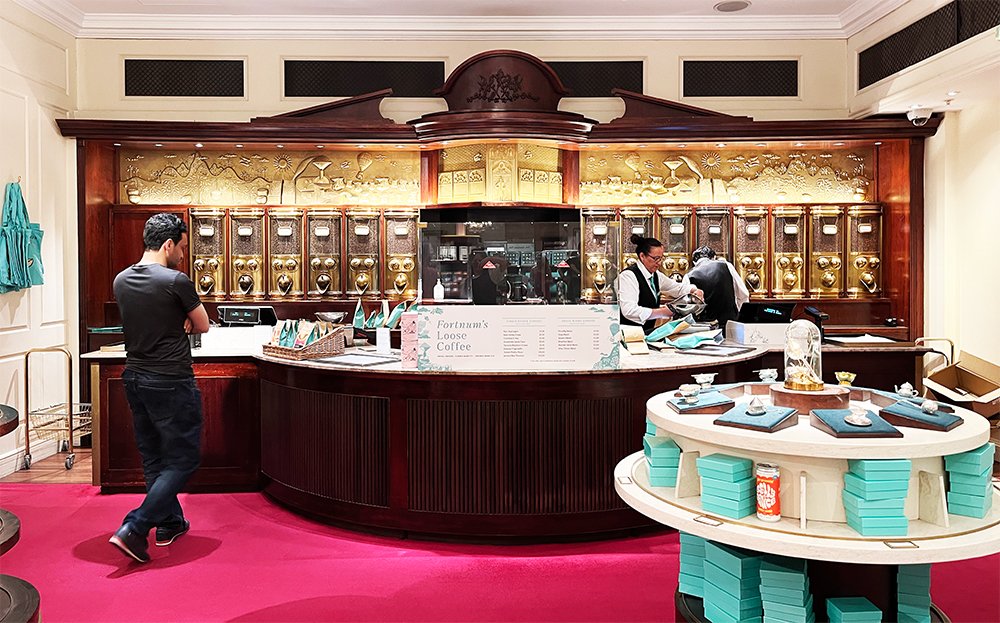
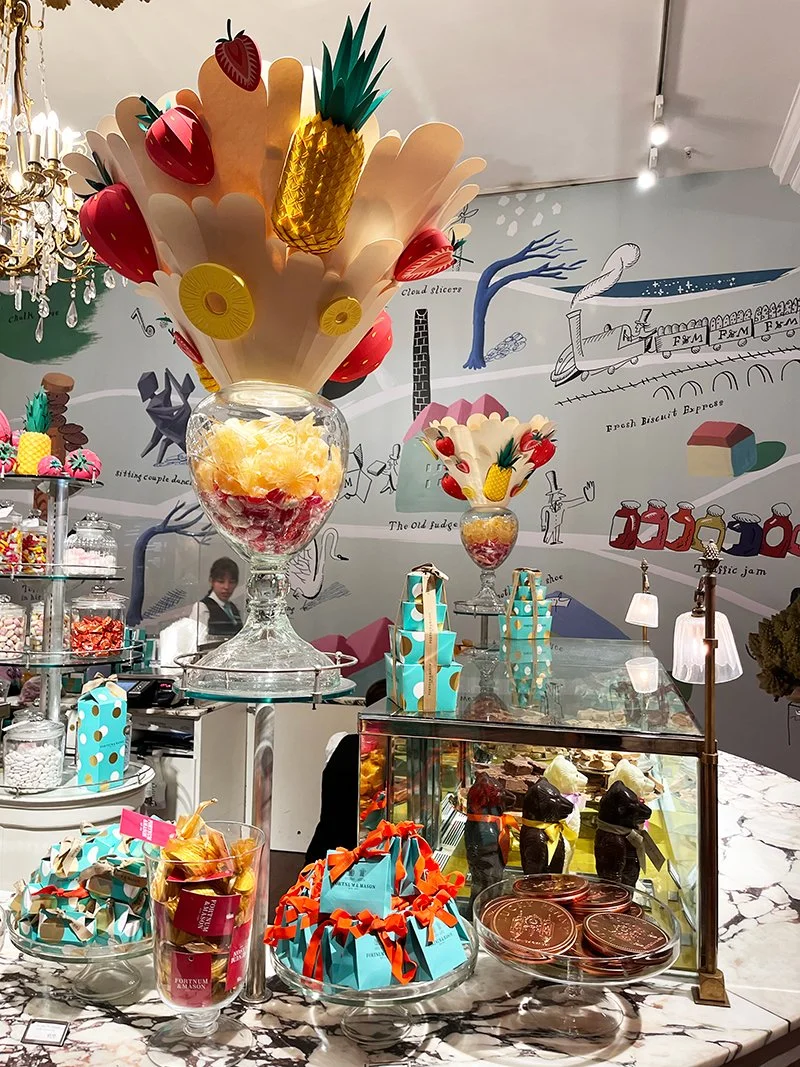
Fortnum and Mason in London Piccadilly
Design strategies that make it local & authentic
Signature palette in context: Eau de nil, rich royal reds, pastel tones, and brass finishes unite the international stores aesthetically with the London heritage, yet are thoughtfully calibrated for each locale’s architecture.
Architectural dialogue: In Hong Kong, Georgian textures and curvilinear forms become anchors in a sleek urban setting; in Dubai, the gold accents echo local luxury cues.
Story-driven fixtures & rituals: From Royal Blend teacup frames to tea bar artefacts and bespoke hampers, design elements embed brand narrative in interactive displays and touch points.
Flexible footprints, unified experience: Across formats, whether boutique airports or flagship integrated restaurants, design language adapts to scale and operational context whilst retaining a consistent Fortnum’s identity.
Fortnum & Mason exemplifies how a heritage brand can expand globally without diluting authenticity, each interior feels thoughtfully composed for its place, with unmistakably British characteristics that are instantly recognisable but not clichéd.
Les Senteurs: brand and interior revitalisation
Les Senteurs is one of London’s oldest independent perfumeries – a strength but also a challenge to remain relevant in today’s digitally-dominated world.
Caulder Moore’s graphic and retail design team took a sensitive approach here; nurturing what customers so loved about the store and celebrating the authority and family heritage, but then creating a new iconic brand identity that works in the digital space.
The existing floral motif was simplified with refined curves, fluidity and balance. The innovative colour palette succeeds in enabling a variety of creative applications across both physical and digital environments. The motif stays true to what existing customers know and recognise, while introducing a fresh, modern energy that appeals to new shoppers.


Les Senteurs branding - before
Les Senteurs new branding by Caulder Moore
Heritage doesn’t mean standing still, it means moving forward with purpose
For heritage brands, the future isn’t about choosing between past and present, it’s about translating legacy into relevance. As the landscape of retail continues to evolve, so too must the environments, experiences and emotional connections these brands offer. A successful evolution demands more than a visual facelift; it requires a thoughtful recalibration of the entire brand experience; digital, physical and cultural. Top-performing brands are those that continue to innovate and inspire.
“In an age of disposable trends and digital sameness, a brand’s heritage has become its greatest superpower. It’s the one story that can’t be copied, the one source of genuine authenticity.” Bas Korsten, Global chief creative officer for innovation and cochief creative officer for EMEA, VML
The brands that endure will be those that honour their history not by preserving it in amber, but by using it as a compass to navigate what comes next. At Caulder Moore, our role is to help you strike that balance, ensuring every design decision deepens connection, invites discovery and inspires loyalty for generations to come.